
Moving to Carmel IN: Essential Tips for New Residents in 2026
Moving to Carmel IN in 2026 places new residents in one of the Midwest’s most prized suburbs, combining arts-focused amenities with strong infrastructure. According to U.S. Census QuickFacts, Carmel’s population recently surpassed 101,000, reflecting steady growth driven by employment access and highly rated schools. That scale remains manageable compared with larger metros, yet still supports sophisticated services, from the Palladium at the Center for the Performing Arts to expanded trails along the Monon Greenway and Monon Trail. Understanding neighborhoods, schools, commuting patterns, and local services helps new residents integrate quickly and confidently.
What Should New Residents Know About Carmel’s Layout and Neighborhoods?
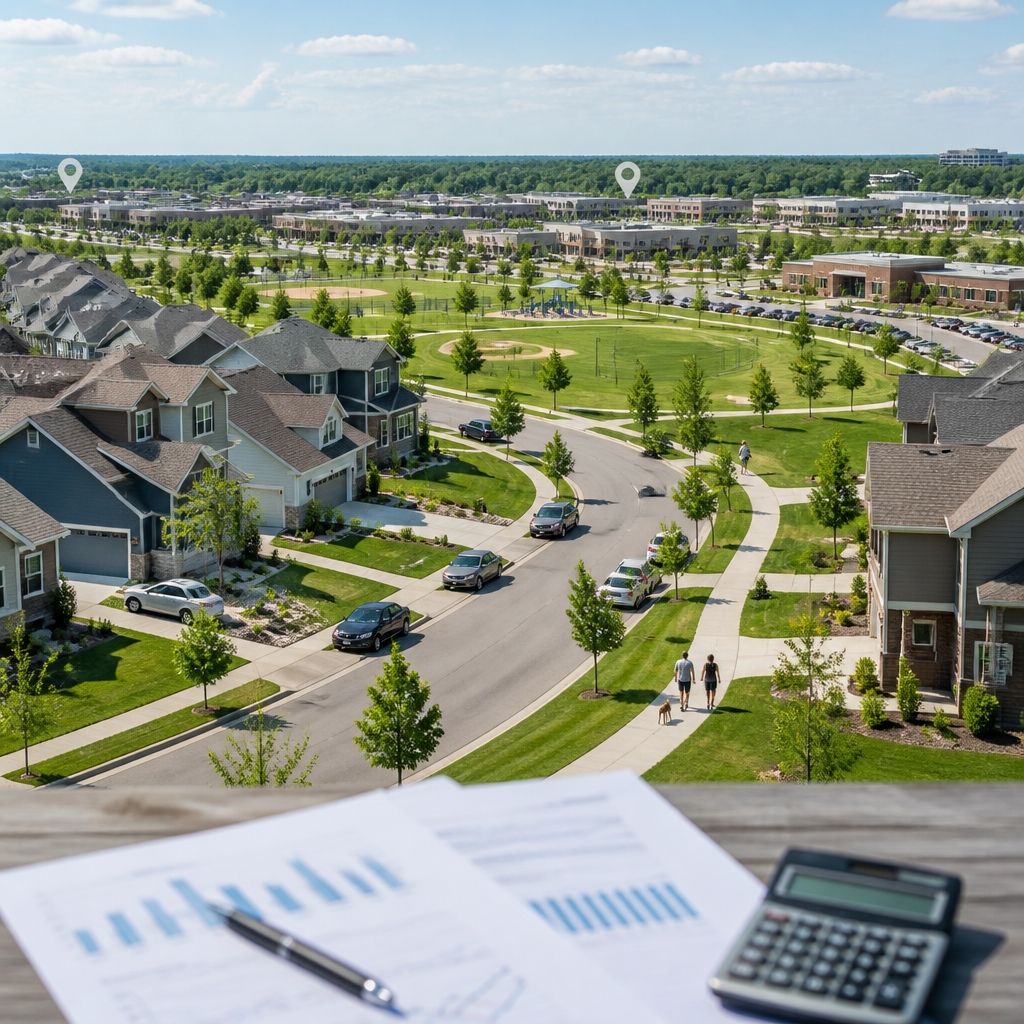
Carmel extends north of Indianapolis, framed by U.S. 31, Keystone Parkway, and Hazel Dell Parkway, with neighborhoods organized around key commercial hubs. According to Visit Hamilton County, the city stretches roughly 15 miles north–south, with major activity focused near Carmel City Center and the Carmel Arts & Design District along Main Street and Rangeline Road. Subdivisions such as Village of WestClay, Brookshire, and Woodland Country Club cluster around parks and golf courses, offering varied housing styles and price points.
Walkability and mixed-use planning shape daily life. The Monon Trail cuts through Midtown Plaza and the Carmel Arts & Design District, linking apartments, townhomes, and single-family homes with coffee shops like Java House and restaurants near Elm Street. According to Walk Score, Carmel posts an overall score near 22, but districts around Carmel City Center, Sophia Square, and Midtown Plaza function as more walkable micro-cores. Residents often pair these hubs with nearby suburban streets such as Main Street, Smoky Row Road, and 146th Street.
Housing stock covers entry-level condos and townhomes near Old Meridian Street to larger homes near Coxhall Gardens, Prairie View Golf Club, and Village of WestClay. According to SmartAsset, typical effective property tax rates in Hamilton County range from about 0.8% to 1.2%, supporting well-funded services without the burden found in some coastal markets. This range, combined with diverse subdivisions, allows residents to match budget, commute, and lifestyle priorities with relative precision across Carmel’s grid.
How Do Schools and Education Options Shape Moving to Carmel IN?
Carmel Clay Schools strongly influence decisions about moving to Carmel IN. According to U.S. Census QuickFacts, about 75.7% of Carmel residents aged 25 or older hold a bachelor’s degree or higher, far above national averages. This education level supports expectations for rigorous academics at Carmel High School, Creekside Middle School, Clay Middle School, and elementary campuses such as Prairie Trace Elementary, Mohawk Trails Elementary, and Forest Dale Elementary. Families often study individual attendance zones block by block around streets like Carey Road and Gray Road.
According to GreatSchools, Carmel High School earns a rating of 10/10, reflecting test scores and college readiness metrics. The large, single high school model fosters extensive extracurriculars, from marching band to robotics, while drawing students from neighborhoods as varied as Brookshire, Home Place, and the Village of WestClay. Middle and elementary schools also post strong scores, though boundaries can shift as enrollment grows, particularly near 146th Street and Hazel Dell Parkway.
On autumn evenings outside Carmel High School along East Main Street, the sharp glow of stadium lights reflects off parked cars while the drumline’s steady rhythm carries through the cool air. The scent of popcorn drifts from concession stands toward nearby homes on Keystone Way, mixing with damp leaves from mature trees edging the sidewalks. Conversations from families gathering near the Carmel Clay Public Library and nearby Midtown Plaza add a gentle hum that makes the entire corridor feel like one extended campus.
What Daily Life Amenities Matter Most When Moving to Carmel IN?
Amenities play a central role when moving to Carmel IN, because many residents structure routines around parks, trails, and arts programming. According to Carmel Clay Parks & Recreation, the system manages more than 700 acres across parks such as Central Park, Coxhall Gardens, Flowing Well Park, Founders Park, and Meadowlark Park. The Monon Community Center at Central Park offers indoor aquatics, fitness facilities, and group classes, providing an all-season counterpart to outdoor amenities along the Monon Trail and nearby Greenways.
Retail and dining clusters create distinct experiences across the city. Clay Terrace along U.S. 31 anchors north Carmel shopping with national brands, while Carmel City Center and the Carmel Arts & Design District feature local restaurants like Bazbeaux Pizza, Bub’s Burgers & Ice Cream, and Anthony’s Chophouse. According to Visit Hamilton County, the Center for the Performing Arts, which includes the Palladium, hosts more than 50 performances annually, ranging from symphonies to touring artists, supporting an active evening calendar.
On a summer Saturday in Midtown Plaza, the soft spray from the interactive fountains cools the brick pavers along the Monon Trail while live music from a small stage near Sun King Brewery echoes between the buildings. The aroma of wood-fired pizza from Anthony’s Chophouse mingles with roasted coffee drifting from Java House, as cyclists roll past Carmel City Center toward Rangeline Road. String lights overhead warm the dusk, giving the plaza a relaxed glow that feels almost like a small festival every night.
How Do Commuting and Transportation Work for Those Moving to Carmel IN?
Commuting patterns significantly influence decisions around moving to Carmel IN, especially for residents working in downtown Indianapolis, Keystone at the Crossing, or the U.S. 31 corporate corridor. According to U.S. Census QuickFacts, Carmel’s mean travel time to work is about 23.5 minutes, a manageable figure compared with many metropolitan areas. Access to U.S. 31, Keystone Parkway, and I‑465 enables drivers from neighborhoods near 116th Street, 126th Street, and Main Street to reach employment centers efficiently.
Public transit options remain more limited than in larger cities, but alternatives exist. According to route information from Janus Developmental Services, the Hamilton County Express offers weekday service linking Carmel, Noblesville, and Fishers, providing a supplemental option for workers without cars. Rideshare usage around Carmel City Center, Clay Terrace, and the Carmel Arts & Design District covers late-evening trips, while extensive sidewalks and the Monon Trail support bicycle commuting from residential areas like Village of WestClay and Old Town.
Parking typically remains straightforward, with numerous garages near the Palladium, Carmel City Center, and Midtown Plaza. According to Visit Hamilton County, multiple public garages offer free parking within walking distance of the Arts & Design District, easing event attendance and restaurant visits. Many subdivisions near Hazel Dell Parkway, Towne Road, and Gray Road also include internal walking paths, allowing residents to combine short drives with pleasant walks, particularly when accessing schools, pocket parks, and local shopping centers.
What Practical Steps Smooth the Transition When Moving to Carmel IN?
Day-to-day logistics matter as much as high-level planning when moving to Carmel IN. According to U.S. Census QuickFacts, about 78% of housing units in Carmel are owner-occupied, with a median household income around $132,859. That profile shapes local expectations about property upkeep, neighborhood association standards, and long-term residency. Prospective homeowners frequently evaluate homeowners association documents in communities such as Village of WestClay, Bridgewater, and Bridgewater Club before closing.
Household budgets must factor in taxes, utilities, and potential association dues. Based on current research by SmartAsset, Hamilton County property tax bills generally fall between 0.8% and 1.2% of assessed value annually, though individual circumstances vary. A home assessed near $400,000 could generate an estimated tax bill in the range of $3,200 to $4,800, while higher-priced estates in communities near Brookshire Golf Club or Woodland Country Club can approach or exceed $2.4M, resulting in proportionally higher obligations.
Market conditions change from year to year. According to regional reports from the MIBOR REALTOR® Association, central Indiana has recently experienced low inventory with months-of-supply figures frequently hovering around 1.5 to 2.0 months. That environment means buyers often prioritize pre-approval, quick decision-making, and flexible closing timelines to remain competitive in Carmel neighborhoods, particularly near Central Park, Carmel Middle School, and the Carmel Arts & Design District where demand remains especially strong.
The 101,000-resident population cited at the start of this guide reflects a community large enough to support sophisticated amenities while still preserving neighborhood-scale connections. That 101,000 figure from the opening underscores the balance between growth and manageability that defines Carmel’s appeal in 2026. The MIBOR REALTOR® Association monthly market insights provide ongoing clarity about inventory, pricing ranges, and contract activity across Hamilton County. Buyers who register listing alerts through regional portals before the spring rush and commit to touring promising Carmel properties within 48 hours of activation during March and April often secure more favorable terms, while those delaying decisions until after the late‑spring surge frequently face higher prices and fewer options.
FROM OUR BLOG

Ahlborn Saint John IN Neighborhood Guide: Explore Your Community in 2026
Ahlborn Saint John IN Neighborhood Guide: Explore Your Community in 2026 The Ahlborn subdivision in Saint John, Indiana, combines small-town calm with access to regional amenities that continue to grow into 2026. According to Niche, the broader Saint John area has a population of about 20,000 reside

Discover Your Dream Home: Greenwood IN Homes for Sale in 2026
Discover Your Dream Home: Greenwood IN Homes for Sale in 2026 Greenwood continues to draw Central Indiana buyers seeking space, amenities, and strong value. According to U.S. Census Bureau QuickFacts, Greenwood’s population surpassed 64,000 residents by 2023, reflecting sustained growth over the pas